The FastGlow Acquisition
Introduction
This is a fictional demonstration case for illustrative purposes only. GreenGlow and FastGlow are composite organizations used to illustrate how acquisition decisions can be evaluated when operational collapse and asset viability coexist. The scenario reflects patterns observed across multiple industries, but it does not describe any real company, transaction, or event.
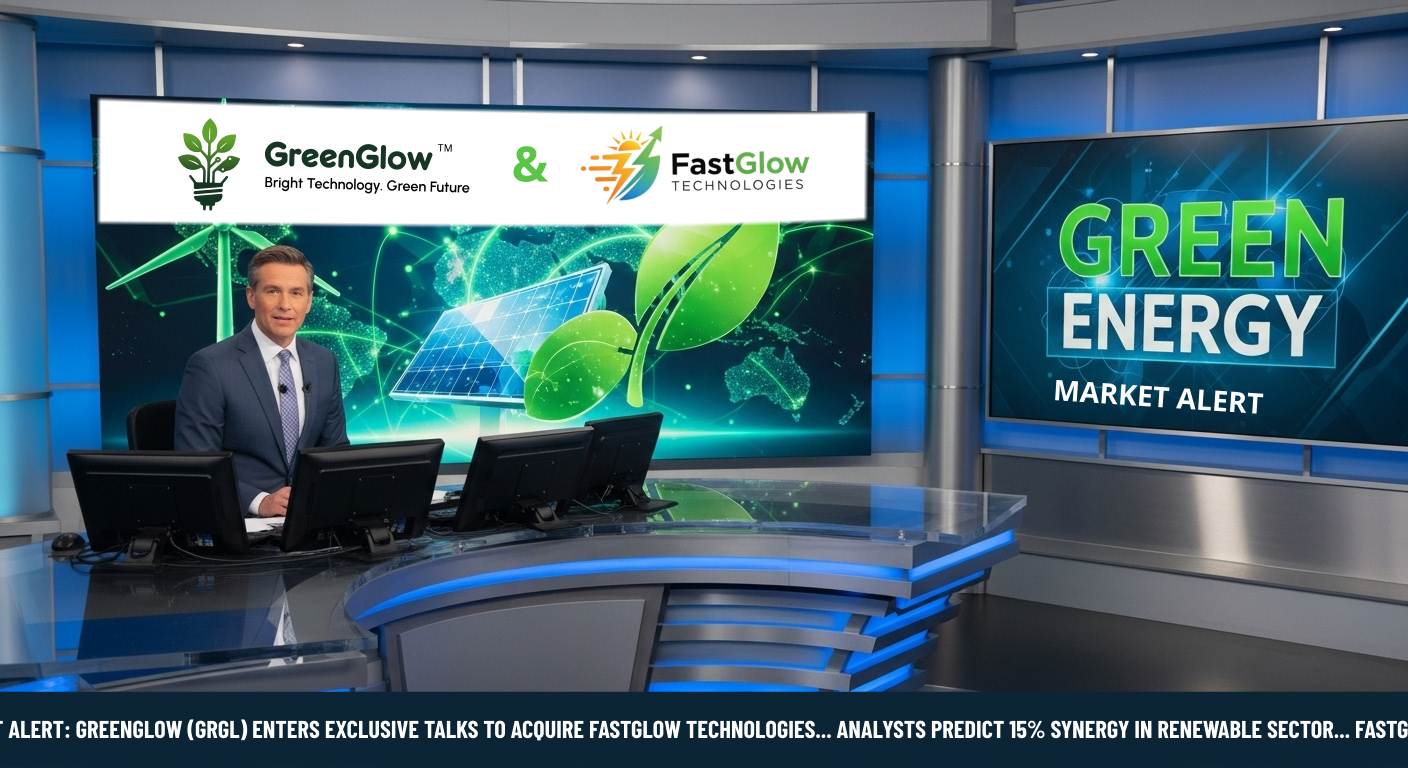
MARKET ALERT: GreenGlow (GRGL) enters exclusive talks to acquire FastGlow Technologies
GreenGlow is presented as a mature organization operating in regulated energy and infrastructure markets, with established governance, verification practices, and long-term public commitments. Its growth strategy prioritizes continuity, reliability, and the preservation of operating integrity over speed.
FastGlow represents a high-growth competitor in the same sector. Its expansion was driven by rapid market entry, aggressive timelines, and strong external recognition. At the time of the acquisition, FastGlow’s public profile suggested success, while internal conditions had already begun to fragment.
The case that follows demonstrates how an acquisition can be approached when value exists inside a structure that can no longer sustain itself as a whole.
What Happened
FastGlow Technologies operated in the same market as GreenGlow, supplying energy-efficient lighting, solar infrastructure, and smart energy systems to public and private buyers. The company expanded rapidly, winning contracts and recognition for innovation and sustainability while maintaining the outward appearance of operational discipline.
Over time, FastGlow’s internal rhythm changed. Product launches accelerated, supplier networks expanded quickly, and verification activities adapted to meet commercial timelines. Performance indicators remained positive, and external confidence stayed high. From the outside, FastGlow appeared healthy, competitive, and aligned with sector expectations.
The collapse came suddenly. Product reliability issues surfaced across multiple markets, triggering warranty claims, regulatory scrutiny, and the withdrawal of public endorsements. Within months, FastGlow’s market position unraveled. Operations halted in several regions, the brand lost credibility, and core assets were placed on the market.
Standard Response
In situations like this, acquisitions typically focus on scale and recovery. Buyers assess whether the business can be stabilized through leadership changes, process tightening, additional controls, or brand rehabilitation. The assumption is that failure resulted from execution gaps that can be corrected once ownership changes.
Traditional diligence emphasizes financial recovery potential, legal exposure, and market share preservation. Integration plans often aim to retain the brand, reassure stakeholders, and restore performance by reinforcing existing structures.
In FastGlow’s case, this approach would have treated the collapse as reversible.
What the Analysis Revealed
Without detailing methodology, the acquisition assessment surfaced several decisive findings:
Selective Asset Integrity
Core production assets and technical data remained viable and transferable. These elements still functioned independently of the organizational breakdown.Governance Breakdown
Decision authority, verification responsibility, and incentive structures had become misaligned. This misalignment could not be corrected through incremental controls.Brand Contamination
The FastGlow brand no longer carried trust with regulators, buyers, or partners. Retaining it would import unresolved credibility loss.Process Theater
Many formal processes continued to operate on schedule but no longer reflected actual operating conditions. Their presence masked rather than supported reliability.Non-Recoverable Structures
Certain internal routines and reporting systems were structurally dependent on the very behaviors that led to collapse.
What This Demonstrates
A conventional acquisition would attempt to fix the organization. This assessment distinguished between what still worked and what no longer could.
Instead of asking how to restore FastGlow, the decision focused on what should survive the acquisition. The result was not a rescue but a selective continuation. Assets were separated from structures that no longer supported credible operation.
This contrasts sharply with recovery-oriented approaches that assume continuity is always desirable.
Why This Matters
For Acquirers
It shows how acquisitions can fail when buyers inherit invisible liabilities embedded in governance and routines.For Regulators and Partners
It illustrates why formal compliance presence alone does not indicate operational trustworthiness.For Boards and Investors
It demonstrates that value preservation sometimes requires letting parts of an organization end rather than attempting to save them.
Key Insights
Not all collapse is operational failure. Some is structural exhaustion.
Viable assets can exist inside non-viable organizations.
Brand, governance, and routines are not always transferable.
Successful acquisitions require discernment, not optimism.
Preserving what still works often means refusing to preserve everything.
The Bottom Line
GreenGlow acquired FastGlow’s remaining infrastructure, technical knowledge, and regional assets while intentionally retiring the FastGlow brand and its governing structures. The decision was not driven by turnaround ambition, but by clarity about what could continue without importing instability.
The acquisition succeeded because it was selective. It preserved operational capability while allowing eroded structures to end. Rather than rebuilding the past, GreenGlow integrated only what still supported reliable performance.
This case shows that acquisitions do not have to be acts of rescue. They can be acts of discernment, where value is protected precisely by knowing what not to carry forward.